Your Cart is Empty
Shipping is free on orders over €60!
Shipping is free on orders over €60!

L-Glutamine is a conditionally essential, or semi-essential, amino acid. Under normal conditions, the body can synthesize it from glutamic acid, so it does not necessarily need to be obtained from the diet. However, during periods of increased demand, consumption may temporarily exceed endogenous production. This is particularly relevant in severe illness, sepsis, extensive trauma, and exhausting physical exertion, when glutamine temporarily becomes indispensable (Lacey and Wilmore, 1990). At the same time, it is the most abundant free amino acid in the human body. In plasma, after an overnight fast, it reaches a concentration of approximately 500 to 750 µmol per liter (Rao and Samak, 2012). In muscle tissue, it accounts for roughly 60 % of the free intracellular amino acid pool at a concentration of around 20 mmol per liter (Cruzat et al., 2018; Fürst et al., 1990). Skeletal muscle acts as the main reservoir and producer of glutamine due to its large mass and high glutamine synthetase activity. From there, glutamine is transported via the bloodstream to the internal organs, particularly the intestine and cells of the immune system (Cruzat et al., 2018; Lacey and Wilmore, 1990). It naturally occurs as part of dietary proteins, including meat, fish, eggs, dairy products, legumes, and wheat gluten. In fact, the historical name of this group of proteins is derived from gluten. The usual daily dietary intake of glutamine itself is estimated at approximately 3 to 6 g and is generally higher in protein-rich diets (Cruzat et al., 2018; Gleeson, 2008). This is useful context when assessing supplements, because a typical supplemental dose of 5 g per day is in the same range as intake from food. Scientific interest in glutamine increased significantly from the 1970s and 1980s onward. At that time, it became clear that it is a key fuel for rapidly dividing cells and that its plasma concentration drops sharply in critically ill patients. This led to its introduction into clinical artificial nutrition, both parenteral and enteral (Cruzat et al., 2018; Wischmeyer et al., 2014). Because free glutamine is unstable in aqueous solutions, the stable dipeptide alanyl-glutamine is used in infusion preparations (Fürst et al., 1990). In the dietary supplement market, glutamine occupies a dual role. Historically, it has been a popular sports nutrition product used for recovery and the so-called protection of muscle mass (Castell et al., 1996; Gleeson, 2008). In recent years, however, it has increasingly become established in the field of gut health, where it is often associated with the concept of a “leaky gut.” This second application has the strongest support from data on its effects on the intestinal barrier (Kim and Kim, 2017; Zhou et al., 2019).
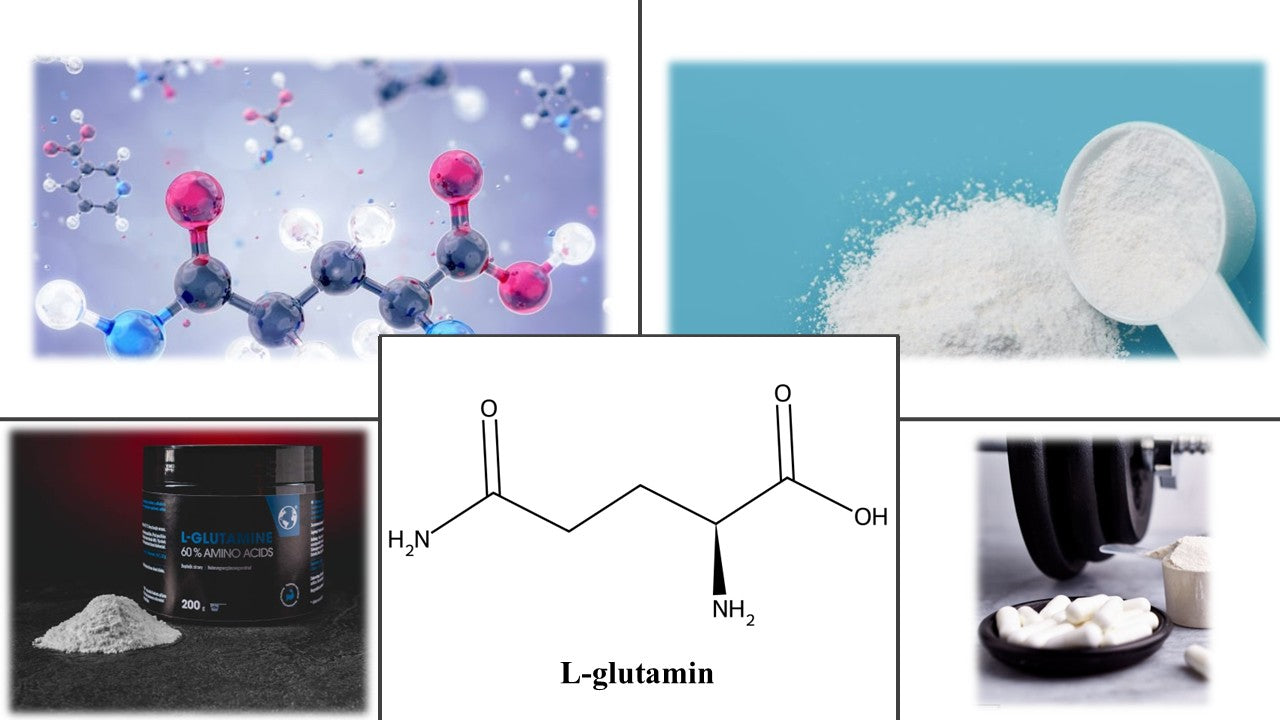
L-Glutamine is systematically known as (S)-2,5-diamino-5-oxopentanoic acid and is traditionally also described as the 5-amide of L-glutamic acid. It is the amide of glutamic acid, formed by binding an amide group to its γ-carboxyl group. Its molecular formula is C5H10N2O3, and its molar mass is approximately 146.15 g/mol. The registration number in the Chemical Abstracts Service (CAS) database is 56-85-9, as stated in the product information of the U.S. Food and Drug Administration (FDA, 2017). The molecule contains 2 nitrogen atoms, one in the α-amino group and the other in the amide group of the side chain (Fig. 1). It is precisely this pair of nitrogen atoms that makes glutamine the principal physiological transporter of nitrogen between tissues and a key tool in ammonia detoxification. By binding free ammonia to glutamate, glutamine is formed, allowing toxic ammonia to be transported safely and later released again in the liver or kidneys (Cruzat et al., 2018). The core of its metabolism consists of 2 opposing reactions. Glutamine synthetase catalyzes the synthesis of glutamine from glutamate and ammonia with the consumption of adenosine triphosphate (ATP). Glutaminase, by contrast, catalyzes the hydrolysis of glutamine back into glutamate and ammonia (Cruzat et al., 2018; Kim and Kim, 2017). In aqueous solution, free glutamine is unstable. At higher temperatures or after prolonged standing, it cyclizes to pyroglutamate, or 5-oxoproline, with the release of ammonia. This instability is precisely why it is replaced in infusion nutrition by the stable and highly soluble dipeptide alanyl-glutamine (Fürst et al., 1990). For practical use, this leads to a simple recommendation. The powder form is stable when stored in a dry and cool place, but a prepared drink should be consumed shortly after mixing. Only the levorotatory L-enantiomer is biologically active, whereas D-glutamine plays a negligible role in human metabolism. Industrially, L-glutamine, like glutamic acid, is produced by microbial fermentation using bacteria of the species Corynebacterium glutamicum (Sano, 2009). The purity of food-grade raw material typically exceeds 98 %.

Figure 1.L-Glutamine.
To understand the actual effects of orally administered glutamine, its pharmacokinetics are essential. After a single dose of 0.1 g per kilogram of body weight, an average peak plasma concentration of approximately 1028 µmol per liter is reached after about 30 minutes. Following intravenous administration, the volume of distribution is approximately 200 ml per kilogram and the terminal half-life is about 1 hour. With repeated administration of higher doses of 0.3 and 0.6 g per kilogram, peak concentrations continue to increase, but not in proportion to the dose, indicating saturable absorption. No accumulation occurs with administration 2× daily, and simultaneous food intake does not significantly affect absorption (FDA, 2017). First-pass metabolism is equally important. A substantial portion of the ingested dose is already consumed by enterocytes of the small intestine and subsequently by the liver, so the increase in systemic plasma concentration remains relatively limited (Cruzat et al., 2018; Kim and Kim, 2017). The intestine is therefore both the main target organ and a competing organ that locally utilizes a large proportion of supplemented glutamine. Glutamine is a preferred fuel for enterocytes and for rapidly dividing cells of the immune system. Lymphocytes and macrophages consume it at a rate comparable to or even higher than glucose. It also serves as a precursor of glutathione, purine and pyrimidine nucleotides, arginine, and citrulline. It additionally contributes to acid-base balance through renal ammoniagenesis and fulfills an anaplerotic role by replenishing intermediates of the Krebs cycle via α-ketoglutarate (Cruzat et al., 2018; DeBerardinis and Cheng, 2010; Kim and Kim, 2017). The first area relevant to dietary supplements is the intestinal barrier. Here, glutamine supports the integrity of tight junctions between enterocytes. Cell and animal studies show that deficiency reduces the expression of the proteins claudin-1, occludin, and zonula occludens-1 (ZO-1) and increases intestinal permeability. Supplementation, in contrast, restores both this expression and barrier function, including through the induction of protective heat shock proteins (Kim and Kim, 2017; Rao and Samak, 2012; Wang et al., 2015). Clinically, particular attention was drawn to a randomized, double-blind, placebo-controlled study in patients with postinfectious irritable bowel syndrome with diarrhea and documented increased intestinal permeability. Administration of 5 g glutamine 3× daily, for a total of 15 g per day, over 8 weeks produced a marked effect. The primary endpoint, namely a reduction of at least 50 points in the symptom severity score, was achieved by 79.6 % of patients taking glutamine compared with 5.8 % in the placebo group. At the same time, glutamine normalized the increased intestinal permeability (Zhou et al., 2019). This was a methodologically high-quality study with a remarkably large difference compared with placebo. However, it was also a single-center study in a specific population, so the results cannot be generalized without caution, and the authors themselves called for confirmation in larger multicenter studies. In short bowel syndrome, glutamine has mostly been studied in combination with growth hormone and a modified diet, with equivocal to marginal benefit. In inflammatory bowel disease, no clear effect has been demonstrated, and in athletes with exercise-induced intestinal hyperpermeability, the evidence remains predominantly mechanistic (Gleeson, 2008; Wang et al., 2015). The second area concerns immune function and catabolic states. Plasma glutamine levels decrease in sepsis, burns, trauma, and major surgery, and this decline correlates with a poorer prognosis. This provided the rationale for supplementation in intensive care (Cruzat et al., 2018; Wischmeyer et al., 2014). A meta-analysis of 15 randomized studies involving 2862 patients did indeed find a lower incidence of nosocomial infections in the glutamine group, specifically with a relative risk of 0.85. The effect was even more pronounced in surgical patients, with a relative risk of 0.70, and with parenteral administration, with a relative risk of 0.83 (Chen et al., 2014). Correct dosing is crucial, however. The REDOXS study (Reducing Deaths due to Oxidative Stress) randomized 1223 critically ill patients with multiple organ failure receiving mechanical ventilation. The dose was 0.35 g per kilogram of ideal body weight daily intravenously together with 30 g daily enterally. In the glutamine group, in-hospital mortality was 37.2 % compared with 31.0 %, and 6-month mortality was 43.7 % compared with 37.2 %, meaning it was significantly higher (Heyland et al., 2013). Similarly, the European MetaPlus study showed higher 6-month mortality, especially in the subgroup of medical patients (Hofman et al., 2016; van Zanten et al., 2014). The same meta-analysis, however, indicates that this unfavorable signal concerned only the subgroup receiving doses above 0.5 g per kilogram daily (Chen et al., 2014). The current guidelines of the European Society for Clinical Nutrition and Metabolism (ESPEN) therefore do not recommend high-dose glutamine in multiple organ failure. At the same time, however, they explicitly recommend it in selected situations. These include parenteral administration in patients who are entirely dependent on parenteral nutrition. They also include enteral administration in burns affecting more than 20 % of body surface area, at a dose of 0.3 to 0.5 g per kilogram daily for 10 to 15 days (Singer et al., 2019). These findings must be interpreted in context, because they concern doses many times higher in critically ill patients and cannot be extrapolated to standard supplemental doses in healthy individuals (Gleeson, 2008; Singer et al., 2019). The third area is sports nutrition. The hypothesis that plasma glutamine decreases after exhausting endurance exercise, followed by impaired immune function, gave rise to an entire market segment of recovery products (Castell et al., 1996; Castell and Newsholme, 1997). More recent reviews have moderated this assumption. A systematic review and meta-analysis of clinical studies in athletes found no significant effect on leukocyte, lymphocyte, or neutrophil counts (Ramezani Ahmadi et al., 2019). A review article in the Journal of Nutrition concludes that convincing evidence is lacking for an effect of oral glutamine on muscle repair after exercise and on muscle soreness (Gleeson, 2008). Smaller studies have nevertheless observed reductions in biomarkers of muscle damage and faster recovery of muscle strength after eccentric exercise (Legault et al., 2015). A realistic conclusion, therefore, is that in people with adequate protein intake, glutamine does not produce a measurable increase in muscle mass. Its role lies more in supporting the gut and during periods of increased stress than in building muscle. The fourth area is sickle cell anemia, which represents the only approved drug indication for L-glutamine. In a phase 3 clinical trial, 230 patients aged 5 to 58 years were randomized to receive oral L-glutamine at a dose of 0.3 g per kilogram 2× daily or placebo. After 48 weeks, L-glutamine reduced the median number of pain crises to 3 compared with 4 in the placebo group and the median number of hospitalizations to 2 compared with 3 (Niihara et al., 2018). Based on these data, the U.S. FDA approved the product “Endari,” an oral L-glutamine powder, in July 2017. It is intended to reduce acute complications of sickle cell anemia in patients aged 5 years and older. The proposed mechanism is a reduction in oxidative damage to erythrocytes through improvement of the redox potential of nicotinamide adenine dinucleotide (NAD) (FDA, 2017; Niihara et al., 2018). In addition, glutamine has been studied in oral mucositis induced by anticancer therapy. A meta-analysis of randomized studies suggests a reduction in the incidence of severe mucositis, although other reviews have not found a clear benefit (Peng et al., 2021). Also related to oncology is the theoretical issue of so-called glutamine dependence of tumor cells, since many tumors exhibit increased glutaminolysis (DeBerardinis and Cheng, 2010).
In clinical studies, doses in the range of 5 to 30 g per day were commonly used. In critically ill patients in intensive care, approximately 0.2 to 0.5 g per kilogram of body weight per day was administered (Heyland et al., 2013; Singer et al., 2019). In postinfectious irritable bowel syndrome, the dose was 15 g per day divided into 3 doses of 5 g each (Zhou et al., 2019). In sickle cell anemia, 0.3 g per kilogram was administered 2× daily, which corresponds to a dose of around 30 g per day in adults (Niihara et al., 2018). In dietary supplements, the most common single dose is 5 g. This corresponds to a single dose used in studies of the intestinal barrier, although it is below the total daily amount of 15 g at which clinical effects were observed (Zhou et al., 2019). In a healthy person with adequate protein intake, it therefore represents more of a supplement to normal intake than a major intervention in metabolism (Cruzat et al., 2018; Gleeson, 2008). If the goal is to support the gut, it may be beneficial to divide the daily amount into several smaller doses. The reasons are saturable absorption and a short half-life. The solution should ideally be prepared fresh and consumed promptly, because glutamine gradually degrades in an aqueous environment (Fürst et al., 1990). Intake does not need to be tied to meals, because food does not significantly affect absorption (FDA, 2017). The safety profile of L-glutamine is favorable, and the substance is generally very well tolerated. A review assessing the safety of amino acids reports that the available literature contained no studies using doses above 0.3 g per kilogram as a single oral dose or above 0.57 g per kilogram per day intravenously for 30 days. Within this range, glutamine was evaluated as safe in both adults and premature infants (Garlick, 2001). A formal risk assessment established the highest observed safe dose at 14 g per day in healthy adults. This was a conservative limit based on the scope of available data, not evidence that higher doses are harmful (Shao and Hathcock, 2008). The most common adverse effects include mild digestive complaints such as constipation, nausea, or abdominal pain, as well as headache. In the clinical trial in sickle cell anemia, these occurred more frequently than in the placebo group, but without serious differences (FDA, 2017; Niihara et al., 2018). Nevertheless, several important precautions apply. In liver cirrhosis and hepatic encephalopathy, glutamine should be avoided because of the risk of worsening hyperammonemia, as it is a source of ammonia. Caution is also warranted in severe renal impairment, because the safety of the pharmaceutical preparation has not been established in hepatic and renal insufficiency (FDA, 2017). In critically ill patients with multiple organ failure, high doses are not recommended because of the signal of increased mortality (Chen et al., 2014; Heyland et al., 2013; Singer et al., 2019). Theoretically, caution is also advised in epilepsy because glutamine is a precursor of the excitatory neurotransmitter glutamate. The same applies to bipolar disorder during a manic phase, where a possible worsening of symptoms has been described. A possible weakening of the effect of lactulose used in hepatic encephalopathy has also been considered. Data on safety in pregnant and breastfeeding women and in young children are lacking, and reproductive studies in animals have not been conducted (FDA, 2017). For these groups, use without consultation with a physician is therefore not recommended. No specific risks have been identified in older adults. A smaller randomized study found no changes in liver or kidney parameters at a dose of approximately 12 g per day for 60 days. Even so, it is recommended to start with a lower dose in view of comorbidities. The greatest benefit can be expected in people whose diets are based on plant proteins, during recovery, and in states of genuinely increased demand (Cruzat et al., 2018; Lacey and Wilmore, 1990).
Glutamine should be viewed as part of a broader range of options rather than as an isolated solution. In the context of sports and muscle mass, whey protein and casein are natural and complete sources. They also provide the full spectrum of amino acids, and their benefits for muscle mass are well documented with a high level of safety. Branched-chain amino acids (BCAA, branched-chain amino acids), and leucine in particular, stimulate muscle protein synthesis with substantially stronger evidence than glutamine. However, here too, the added value is limited in people with adequate protein intake (Wolfe, 2017). Creatine monohydrate remains the most strongly supported sports supplement overall, with its efficacy and safety confirmed by the position statement of the International Society of Sports Nutrition (Kreider et al., 2017). To support the intestinal barrier and digestion, probiotics are a well-supported option, particularly the yeast Saccharomyces boulardii in certain forms of diarrhea (McFarland, 2010). Dietary fiber and its fermentation product butyrate are also well established; butyrate is the main fuel for colonocytes and supports barrier integrity (Berni Canani et al., 2011). Another interesting option is zinc carnosine, for which data show stabilization of small intestinal integrity and stimulation of mucosal healing (Mahmood et al., 2007). Collagen and glycine are additionally mentioned as sources of amino acids for connective tissue and mucous membranes, although direct evidence is limited. In irritable bowel syndrome, a diet low in fermentable oligosaccharides, disaccharides, monosaccharides, and polyols (FODMAP) is a well-supported first-line dietary approach. Its efficacy is confirmed by systematic reviews and network meta-analyses (Black et al., 2022). In the subgroup of patients with postinfectious irritable bowel syndrome and increased permeability, glutamine may be considered as an adjunct to this standard approach (Black et al., 2022; Zhou et al., 2019). Overall, it is a substance with a well-described physiological role and a very favorable safety profile. The strongest evidence supports its targeted use for the intestinal barrier, during recovery, and in states of increased demand (Chen et al., 2014; Kim and Kim, 2017; Zhou et al., 2019).
Written for Kratom World by:
Ing. Matěj Malík, Ph.D.
Research Scientist, Postdoctoral Researcher
Faculty of Agrobiology, Food and Natural Resources, Czech University of Life Sciences Prague
Department of Agroenvironmental Chemistry and Plant Nutrition

References
Berni Canani, R., Di Costanzo, M., Leone, L., Pedata, M., Meli, R., Calignano, A., 2011. Potential beneficial effects of butyrate in intestinal and extraintestinal diseases. World Journal of Gastroenterology. 17, 1519-1528. https://doi.org/10.3748/wjg.v17.i12.1519.
Black, C.J., Staudacher, H.M., Ford, A.C., 2022. Efficacy of a low FODMAP diet in irritable bowel syndrome, systematic review and network meta-analysis. Gut. 71, 1117-1126. https://doi.org/10.1136/gutjnl-2021-325214.
Castell, L.M., Poortmans, J.R., Newsholme, E.A., 1996. Does glutamine have a role in reducing infections in athletes? European Journal of Applied Physiology and Occupational Physiology. 73, 488-490. https://doi.org/10.1007/BF00334429.
Castell, L.M., Newsholme, E.A., 1997. The effects of oral glutamine supplementation on athletes after prolonged, exhaustive exercise. Nutrition. 13, 738-742. https://doi.org/10.1016/S0899-9007(97)83036-5.
Chen, Q.H., Yang, Y., He, H.L., Xie, J.F., Cai, S.X., Liu, A.R., Wang, H.L., Qiu, H.B., 2014. The effect of glutamine therapy on outcomes in critically ill patients, a meta-analysis of randomized controlled trials. Critical Care. 18, R8. https://doi.org/10.1186/cc13185.
Cruzat, V., Rogero, M.M., Keane, K.N., Curi, R., Newsholme, P., 2018. Glutamine, metabolism and immune function, supplementation and clinical translation. Nutrients. 10, 1564. https://doi.org/10.3390/nu10111564.
DeBerardinis, R.J., Cheng, T., 2010. Q's next, the diverse functions of glutamine in metabolism, cell biology and cancer. Oncogene. 29, 313-324. https://doi.org/10.1038/onc.2009.358.
FDA, 2017. ENDARI (L-glutamine oral powder), Highlights of Prescribing Information, NDA 208587. U.S. Food and Drug Administration, Silver Spring. https://www.accessdata.fda.gov/drugsatfda_docs/label/2017/208587s000lbl.pdf.
Fürst, P., Albers, S., Stehle, P., 1990. Glutamine-containing dipeptides in parenteral nutrition. Journal of Parenteral and Enteral Nutrition. 14, 118S-124S. https://doi.org/10.1177/014860719001400417.
Garlick, P.J., 2001. Assessment of the safety of glutamine and other amino acids. Journal of Nutrition. 131, 2556S-2561S. https://doi.org/10.1093/jn/131.9.2556S.
Gleeson, M., 2008. Dosing and efficacy of glutamine supplementation in human exercise and sport training. Journal of Nutrition. 138, 2045S-2049S. https://doi.org/10.1093/jn/138.10.2045S.
Heyland, D., Muscedere, J., Wischmeyer, P.E., Cook, D., Jones, G., Albert, M., Elke, G., Berger, M.M., Day, A.G., Canadian Critical Care Trials Group, 2013. A randomized trial of glutamine and antioxidants in critically ill patients. New England Journal of Medicine. 368, 1489-1497. https://doi.org/10.1056/NEJMoa1212722.
Hofman, Z., Swinkels, S., van Zanten, A.R.H., 2016. Glutamine, fish oil and antioxidants in critical illness, MetaPlus trial post hoc safety analysis. Annals of Intensive Care. 6, 119. https://doi.org/10.1186/s13613-016-0220-y.
Kim, M.H., Kim, H., 2017. The roles of glutamine in the intestine and its implication in intestinal diseases. International Journal of Molecular Sciences. 18, 1051. https://doi.org/10.3390/ijms18051051.
Kreider, R.B., Kalman, D.S., Antonio, J., Ziegenfuss, T.N., Wildman, R., Collins, R., Candow, D.G., Kleiner, S.M., Almada, A.L., Lopez, H.L., 2017. International Society of Sports Nutrition position stand, safety and efficacy of creatine supplementation in exercise, sport, and medicine. Journal of the International Society of Sports Nutrition. 14, 18. https://doi.org/10.1186/s12970-017-0173-z.
Lacey, J.M., Wilmore, D.W., 1990. Is glutamine a conditionally essential amino acid? Nutrition Reviews. 48, 297-309. https://doi.org/10.1111/j.1753-4887.1990.tb02967.x.
Legault, Z., Bagnall, N., Kimmerly, D.S., 2015. The influence of oral L-glutamine supplementation on muscle strength recovery and soreness following unilateral knee extension eccentric exercise. International Journal of Sport Nutrition and Exercise Metabolism. 25, 417-426. https://doi.org/10.1123/ijsnem.2014-0209.
Mahmood, A., FitzGerald, A.J., Marchbank, T., Ntatsaki, E., Murray, D., Ghosh, S., Playford, R.J., 2007. Zinc carnosine, a health food supplement that stabilises small bowel integrity and stimulates gut repair processes. Gut. 56, 168-175. https://doi.org/10.1136/gut.2006.099929.
McFarland, L.V., 2010. Systematic review and meta-analysis of Saccharomyces boulardii in adult patients. World Journal of Gastroenterology. 16, 2202-2222. https://doi.org/10.3748/wjg.v16.i18.2202.
Niihara, Y., Miller, S.T., Kanter, J., Lanzkron, S., Smith, W.R., Hsu, L.L., Gordeuk, V.R., Viswanathan, K., Sarnaik, S., Osunkwo, I., Guillaume, E., Sadanandan, S., Sieger, L., Lasky, J.L., Panosyan, E.H., Blake, O.A., New, T.N., Bellevue, R., Tran, L.T., Razon, R.L., Stark, C.W., Neumayr, L.D., Vichinsky, E.P., 2018. A phase 3 trial of L-glutamine in sickle cell disease. New England Journal of Medicine. 379, 226-235. https://doi.org/10.1056/NEJMoa1715971.
Peng, H., Wang, S.H., Wang, M., Ye, Y., Xue, E., Chen, X., Wang, X., Li, M., Gao, Y., Liu, X., Chu, X., 2021. Effectiveness of glutamine in the management of oral mucositis in cancer patients, a meta-analysis of randomized controlled trials. Supportive Care in Cancer. 29, 4885-4892. https://doi.org/10.1007/s00520-021-06060-9.
Ramezani Ahmadi, A., Rayyani, E., Bahreini, M., Mansoori, A., 2019. The effect of glutamine supplementation on athletic performance, body composition, and immune function, a systematic review and a meta-analysis of clinical trials. Clinical Nutrition. 38, 1076-1091. https://doi.org/10.1016/j.clnu.2018.05.001.
Rao, R., Samak, G., 2012. Role of glutamine in protection of intestinal epithelial tight junctions. Journal of Epithelial Biology and Pharmacology. 5, 47-54. https://doi.org/10.2174/1875044301205010047.
Sano, C., 2009. History of glutamate production. American Journal of Clinical Nutrition. 90, 728S-732S. https://doi.org/10.3945/ajcn.2009.27462F.
Shao, A., Hathcock, J.N., 2008. Risk assessment for the amino acids taurine, L-glutamine and L-arginine. Regulatory Toxicology and Pharmacology. 50, 376-399. https://doi.org/10.1016/j.yrtph.2008.01.004.
Singer, P., Blaser, A.R., Berger, M.M., Alhazzani, W., Calder, P.C., Casaer, M.P., Hiesmayr, M., Mayer, K., Montejo, J.C., Pichard, C., Preiser, J.C., van Zanten, A.R.H., Oczkowski, S., Szczeklik, W., Bischoff, S.C., 2019. ESPEN guideline on clinical nutrition in the intensive care unit. Clinical Nutrition. 38, 48-79. https://doi.org/10.1016/j.clnu.2018.08.037.
van Zanten, A.R.H., Sztark, F., Kaisers, U.X., Zielmann, S., Felbinger, T.W., Sablotzki, A.R., De Waele, J.J., Timsit, J.F., Honing, M.L., Keh, D., Vincent, J.L., Zazzo, J.F., Fijn, H.B., Petit, L., Preiser, J.C., van Horssen, P.J., Hofman, Z., 2014. High-protein enteral nutrition enriched with immune-modulating nutrients vs standard high-protein enteral nutrition and nosocomial infections in the ICU, a randomized clinical trial. JAMA. 312, 514-524. https://doi.org/10.1001/jama.2014.7698.
Wang, B., Wu, G., Zhou, Z., Dai, Z., Sun, Y., Ji, Y., Li, W., Wang, W., Liu, C., Han, F., Wu, Z., 2015. Glutamine and intestinal barrier function. Amino Acids. 47, 2143-2154. https://doi.org/10.1007/s00726-014-1773-4.
Wischmeyer, P.E., Dhaliwal, R., McCall, M., Ziegler, T.R., Heyland, D.K., 2014. Parenteral glutamine supplementation in critical illness, a systematic review. Critical Care. 18, R76. https://doi.org/10.1186/cc13836.
Wolfe, R.R., 2017. Branched-chain amino acids and muscle protein synthesis in humans, myth or reality? Journal of the International Society of Sports Nutrition. 14, 30. https://doi.org/10.1186/s12970-017-0184-9.
Zhou, Q., Verne, M.L., Fields, J.Z., Lefante, J.J., Basra, S., Salameh, H., Verne, G.N., 2019. Randomised placebo-controlled trial of dietary glutamine supplements for postinfectious irritable bowel syndrome. Gut. 68, 996-1002. https://doi.org/10.1136/gutjnl-2017-315136.